 Jul 12, 2026 - 0
Minutes read
Jul 12, 2026 - 0
Minutes read
Best Washer-Dryer for Rainy Season
Washer-Dryer Buying Guide: Choose the Best Model
Washer-Dryer Buying Guide: How to Choose the Best One

A washer-dryer combines washing and drying into one unit, making it ideal for smaller homes. Choosing the right one means weighing capacity, energy efficiency, cycle times, and whether an all-in-one or separate units better suit your space and lifestyle.
Buying a new washer-dryer sounds straightforward—until you're staring at a wall of options with conflicting specs, unfamiliar features, and a wide range of price points. It's easy to pick something that looks right on paper but falls short in real life, whether that's a drum too small for family loads or energy bills higher than expected.
This guide breaks down everything you need to know before buying a washer-dryer. From how these machines work to the exact features worth paying for, you'll walk away with a clear picture of what suits your home, your budget, and your laundry habits.
What Is a Washer-Dryer and How Does It Work?
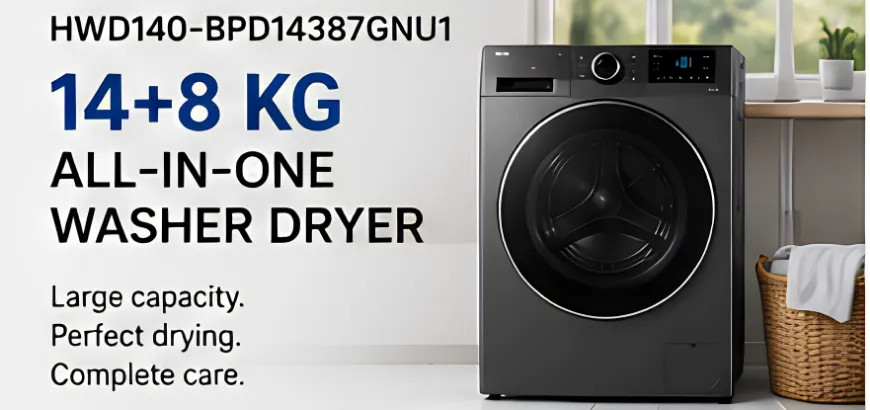
A washer-dryer is a single appliance that both washes and dries clothes, typically using the same drum for both functions. The washing cycle works much like a standard washing machine—water, detergent, and drum rotation clean your clothes. Once the wash is complete, the drying cycle kicks in, using either a condenser or heat pump system to remove moisture from the load.
Condenser drying heats air to evaporate moisture, then cools it to collect the water in a tank or drain it out. Heat pump drying, found in more premium models, recycles hot air to dry clothes at a lower temperature—gentler on fabrics and significantly more energy-efficient.
Key benefits of a washer-dryer
- Space-saving: One machine does the job of two, making washer-dryers a natural fit for apartments, small homes, or any space where a separate washer and dryer simply won't fit.
- Convenience: Load your clothes once and walk away. No manually transferring wet laundry between machines.
- Cost-effective upfront: A single unit typically costs less than purchasing two separate, high-quality appliances.
- Simpler installation: One water connection, one power outlet, one drain—no need to configure two separate machines.
That said, washer-dryers do come with trade-offs, most notably around drying capacity and cycle time. Understanding these limitations upfront helps you make a smarter purchase.
Types of Washer-Dryers: All-in-One vs. Separate Units
Not all washer-dryer setups look the same. Before comparing brands and features, it helps to understand the two main configurations available.
All-in-one washer-dryers
An all-in-one washer-dryer handles both washing and drying in a single drum without any load transfer. These units are the most space-efficient option on the market and are widely popular in urban apartments and compact laundry areas.
The main limitation: most all-in-one models can only dry half the wash load at a time. So if you wash 8 kg of laundry, you can typically only dry around 4–5 kg in the same cycle. Running a combined wash-and-dry cycle also takes longer than doing each separately—often three to five hours in total.
All-in-one washer-dryers are a strong choice for:
- Single people or couples with smaller, regular loads
- Anyone with limited laundry space
- Renters who want flexibility without major installation work
Washer and dryer stacked or side-by-side (separate units)
Separate washer and dryer units—whether stacked vertically or placed side by side—offer greater capacity and faster overall laundry times. Each machine operates independently, meaning you can dry one load while the next is washing.
Separate units suit larger households better, where laundry volume is higher and drying efficiency matters more. They do require more space and a higher upfront investment, but the performance trade-off is significant.
How to Choose the Right Washer-Dryer: A Step-by-Step Buying Guide
Step 1: Measure your available space
Before anything else, measure the space where your washer-dryer will sit. Standard front-loading units are roughly 60 cm wide, 60 cm deep, and 85 cm tall. If your laundry area is particularly narrow or shallow, confirm exact dimensions before purchasing. Also check doorways and hallways—delivery teams need to get the machine in first.
Step 2: Determine your laundry load size
Think about how much laundry your household generates each week. A single person or couple can typically manage with a 7–8 kg wash capacity. Families of three or more will benefit from 9–12 kg. Keep in mind that the drying capacity on all-in-one units is usually 40–50% lower than the wash capacity, so factor that in when estimating cycle frequency.
Step 3: Set a realistic budget
Washer-dryer pricing varies considerably. Entry-level models start around $700–$900, mid-range units fall between $1,000–$1,500, and premium models with heat pump drying and smart features can exceed $2,000. A higher upfront cost on a heat pump model often pays off over time through lower running costs.
Step 4: Decide on your must-have features
Not every feature justifies the added expense. Identify which features matter for your specific situation—capacity, spin speed, energy rating, smart connectivity—and use those as your filter when comparing models. More on this in the next section.
Step 5: Check installation requirements
Confirm whether you need a plumber or electrician for installation. Most front-loaders connect to a standard cold-water inlet and drain hose, but some premium models have specific electrical requirements. Ventless models (heat pump or condenser types) are easier to install than vented dryers, which require an external air outlet.
Key Features to Look For in a Washer-Dryer
Capacity: wash load vs. dry load
Always check both the wash capacity and the drying capacity separately. A machine labeled "9 kg" may only dry 5 kg per cycle. For households that run full loads regularly, this can double your drying time if you're not careful.
Energy efficiency ratings
Look for models with high energy efficiency ratings—particularly those using heat pump technology. Heat pump washer-dryers use significantly less electricity than condenser models and are gentler on clothing. According to Energy Star, heat pump dryers use about 20–60% less energy than conventional electric dryers. Over several years of use, those savings add up.
Wash programs and cycle flexibility
A good washer-dryer should cover the basics: cotton, synthetics, delicates, quick wash, and a combined wash-and-dry cycle. Beyond that, look for programs suited to your specific needs—allergen cycles, sportswear settings, wool care, or baby garment options. More programs don't always mean better performance, but versatility matters for households with varied laundry types.
Spin speed
Spin speed, measured in RPM (revolutions per minute), affects how much moisture remains in your clothes after washing. A higher spin speed—1400 RPM or above—extracts more water, which shortens the drying cycle and reduces energy use. For all-in-one washer-dryers, a faster spin is particularly useful since it cuts down the total combined cycle time.
Smart features and connectivity
Premium washer-dryers now offer Wi-Fi connectivity and companion apps that let you start, pause, or monitor cycles remotely. Some models integrate with smart home systems like Google Home or Amazon Alexa. While these features aren't essential, they add genuine convenience—especially if you want to run laundry while you're out and receive an alert when it's done.
Noise levels
If your laundry area sits close to living spaces or bedrooms, noise levels matter. Look for models with a decibel rating of 50 dB or lower during the wash cycle. Many manufacturers publish noise ratings in product specs—it's worth checking before you buy.
Making the Right Call for Your Home
A washer-dryer is a long-term investment. The right choice depends less on brand prestige and more on matching the machine's specs to your actual lifestyle—your household size, your available space, how often you do laundry, and what you're willing to spend each month on running costs.
All-in-one units deliver real value for smaller households and tight spaces. Separate units pull ahead when capacity and speed are priorities. Either way, prioritizing energy efficiency, appropriate capacity, and reliable wash programs will serve you better than chasing the longest feature list.
Take the measurements, know your load size, and compare models within your budget against those criteria. A little research upfront saves a lot of frustration down the line.
Frequently Asked Questions
Is a washer-dryer better than separate machines?
It depends on your space and laundry volume. All-in-one washer-dryers are more space-efficient and cost less upfront, but separate machines offer higher drying capacity and faster turnaround. For single people or couples in smaller homes, an all-in-one washer-dryer is often the more practical choice. Larger households with heavier laundry loads will generally get better performance from separate units.
How long does a washer-dryer take to wash and dry clothes?
A combined wash-and-dry cycle typically takes three to five hours. The washing portion alone usually runs 45–90 minutes depending on the program selected, while the drying phase adds another 90–180 minutes. To save time, consider running wash-only cycles and using the dryer function separately for smaller loads.
Can a washer-dryer dry a full wash load?
Most all-in-one washer-dryers cannot dry a full wash load in one cycle. The drying capacity is typically 40–50% of the washing capacity—so a machine that washes 8 kg may only dry 4–5 kg at once. To work around this, either split your load before drying or look for models with a higher drying-to-wash capacity ratio.
How much electricity does a washer-dryer use?
Electricity use varies by model and drying technology. Condenser washer-dryers typically consume 2–3 kWh per combined cycle, while heat pump models use significantly less—often 1–1.5 kWh. According to Energy Star, heat pump dryers use 20–60% less energy than conventional electric dryers. Choosing an energy-efficient model and running full loads reduces your overall consumption.
How long does a washer-dryer typically last?
A well-maintained washer-dryer typically lasts 10–12 years. Regular cleaning of the drum, detergent drawer, and condenser filter extends its lifespan. Avoiding overloading the machine and using the correct detergent for your model type also reduces wear on key components over time.
