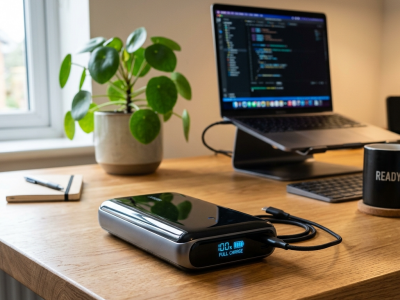
 Jun 29, 2026 - 0
Minutes read
Jun 29, 2026 - 0
Minutes read
How to Choose the Right Power Bank
Power Bank Buying Guide: How to Choose the Best Power Bank
Power Bank Buying Guide: How to Choose the Best Power Bank
A power bank is a portable battery that charges your devices on the go. The right one depends on your device type, daily usage, and travel needs. Key factors include capacity (mAh), charging speed (watts), port types, and safety certifications.
Running out of battery at the worst possible moment—mid-navigation, during a call, or on a long flight—is one of those small frustrations that can throw off your entire day. And with smartphones, tablets, and laptops becoming more central to daily life, battery anxiety is more real than ever.
This guide will walk you through everything you need to know before buying a power bank: what to look for, what to avoid, how to stay safe, and which type suits your lifestyle best. No jargon, no fluff—just clear, practical advice to help you make the right call.
What Is a Power Bank?
A power bank is a portable, rechargeable battery device designed to charge smartphones, tablets, laptops, and other USB-powered electronics when a wall outlet isn't available. Power banks store electrical energy internally and release it through one or more output ports when connected to a device.
Most power banks connect via USB-A, USB-C, or Micro-USB cables. Higher-end models support wireless charging or multiple simultaneous outputs. They range in size from slim, pocket-friendly units to heavy-duty packs capable of charging laptops.
Why You Need a Power Bank in Daily Life
Modern smartphones consume more power than ever. High-resolution displays, GPS, streaming, and 5G connectivity all drain batteries faster than older generations of devices. The average smartphone battery lasts about 10–16 hours under moderate use—which isn't always enough for a full day.
A power bank fills that gap. Whether you're commuting, camping, traveling internationally, or simply stuck in a long meeting away from a charger, a power bank gives you the flexibility to stay powered without depending on a fixed outlet. For anyone who relies on their phone for work, navigation, or health monitoring, it's less of a luxury and more of a daily essential.
Different Types of Power Banks
Not all power banks are built the same. Understanding the main types helps you match the right device to your needs.
Standard Power Banks
These are the most common. They're compact, affordable, and work well for charging smartphones once or twice. Capacities typically range from 5,000mAh to 20,000mAh.
High-Capacity Power Banks
Designed for heavy users or multi-device charging, these units store 20,000mAh or more. They're bulkier but ideal for travel, camping, or situations where you won't have access to a power outlet for extended periods.
Slim or Lipstick Power Banks
Ultra-compact and lightweight, these fit easily in a pocket or purse. Most offer between 3,000mAh and 5,000mAh—enough for a single top-up on most smartphones. Convenience is the priority here.
Solar Power Banks
These include built-in solar panels for off-grid charging. Solar charging is slow and best treated as a supplementary option rather than a primary source—but they're great for outdoor adventures where grid power is completely unavailable.
Laptop Power Banks
These high-output power banks deliver enough wattage (typically 45W–100W) to charge laptops via USB-C. They're significantly heavier and more expensive, but essential for professionals who work on the move.
Wireless Power Banks
These support Qi wireless charging, allowing you to charge compatible devices simply by placing them on the surface. Many wireless models also include wired output ports for non-wireless devices.
How to Choose the Right Power Bank
Choosing the right power bank comes down to four core questions:
- What devices will you charge? Smartphones require less capacity than laptops. Match your power bank's output wattage to your device's charging requirements.
- How often will you need it? Casual, occasional users can get by with 10,000mAh. Frequent travelers or heavy users should aim for 20,000mAh or more.
- How important is portability? Higher capacity means more weight. If you carry it daily, prioritize slim designs.
- What's your budget? Entry-level power banks start around $15–$25. Feature-rich models with fast charging and high capacity can run $60–$100 or more.
Power Bank Capacity Explained: mAh, Watts, and Charging Speed
What Does mAh Mean?
mAh stands for milliampere-hour. It measures how much energy a power bank can store. A higher mAh number means more charges before the power bank itself needs to be recharged.
As a rough guide:
- 5,000mAh – approximately 1 full charge for most smartphones
- 10,000mAh – approximately 2–3 charges for most smartphones
- 20,000mAh – approximately 4–6 charges, or 1–2 charges for a tablet
Keep in mind that real-world performance is about 85–90% of the stated capacity due to energy loss during conversion.
What Do Watts Tell You?
Watts (W) determine charging speed. A higher wattage means faster charging—both for your device and for recharging the power bank itself.
- 5W–10W: Standard charging. Slow but functional.
- 18W–30W: Fast charging. Suitable for most modern smartphones.
- 45W–100W: Required for laptops and fast-charging tablets.
Fast Charging Technologies
Look for support for common fast-charging standards like Qualcomm Quick Charge (QC 3.0 or 4.0), USB Power Delivery (USB-PD), or proprietary systems like Huawei SuperCharge or Apple's 20W fast charge. These can cut charging time significantly compared to standard 5W output.
Important Features to Check Before Buying a Power Bank
Beyond capacity and speed, these features are worth examining closely:
- Number of ports: Multiple output ports let you charge several devices at once.
- Input port type: USB-C input charges the power bank faster than Micro-USB.
- Pass-through charging: Allows the power bank to charge your device and itself simultaneously.
- LED indicators: Show remaining battery level. Some premium models include a digital percentage display.
- Weight and size: Critical for daily carry. A 20,000mAh power bank can weigh up to 450g.
- Brand and certifications: Look for CE, FCC, or RoHS certifications, and choose reputable brands with established safety records.
Power Bank Safety Tips: How to Use It Properly
Power banks contain lithium-ion batteries, which require proper handling. Follow these safety practices:
- Avoid extreme temperatures. Don't leave your power bank in a hot car or expose it to freezing conditions. Heat degrades battery life; extreme cold reduces performance temporarily.
- Don't overcharge. Most modern power banks have overcharge protection built in, but it's still good practice to unplug once fully charged.
- Use the correct cable. Low-quality cables can cause slow charging or, in rare cases, create electrical risks.
- Don't store at 0% or 100%. For long-term storage, keep the charge between 40–60% to preserve battery health.
- Check for damage. A swollen, cracked, or overheating power bank should be replaced immediately—don't continue using it.
Common Mistakes to Avoid When Buying a Power Bank
Many buyers regret their purchase because of easily avoidable missteps:
Buying based on mAh alone. A cheap 20,000mAh power bank with poor cells may deliver far less usable energy than a quality 10,000mAh unit. Brand reputation and build quality matter.
Ignoring output wattage. A 5W output will charge a modern smartphone painfully slowly. Always check the wattage before purchasing.
Choosing the wrong size for travel. Most airlines restrict power banks above 100Wh (roughly 27,000mAh) in carry-on luggage. If you fly frequently, verify the Wh rating.
Skipping certifications. Uncertified power banks from unknown manufacturers carry a higher risk of overheating or failure. Certifications like CE or FCC indicate basic safety compliance.
Not checking compatibility. USB-C doesn't always mean fast charging. Confirm the actual power delivery specs match your device's requirements.
Best Power Bank for Phone, Laptop, Travel, and Emergency Use
Best for everyday phone use: A 10,000mAh power bank with USB-PD support and a slim form factor hits the sweet spot between capacity and portability. Brands like Anker, Belkin, and Baseus consistently deliver reliable options in this category.
Best for laptop users: Look for a 20,000mAh+ power bank with at least 65W USB-C Power Delivery output. Confirm your laptop's charging wattage first—most ultrabooks charge at 45W–65W.
Best for travel: A 20,000mAh model that falls under the 100Wh airline limit is the safest choice. Dual USB-C ports and fast charging support make it even more versatile across international trips.
Best for emergencies: A rugged, weather-resistant power bank with a built-in flashlight and solar charging capability is ideal for outdoor or emergency preparedness kits. Brands like Goal Zero and RAVPower offer solid options here.
Choose Your Power Bank with Confidence
The right power bank isn't the most expensive one or the one with the biggest number on the box. It's the one that matches your specific lifestyle, devices, and habits. Start by identifying your most-used device and its battery capacity, decide how many charges you need per day, then filter by output wattage and portability. From there, stick with certified brands and read verified reviews before committing.
Portable power doesn't have to be complicated. With the information in this guide, you're equipped to make a smart, informed purchase—and stay charged no matter where the day takes you.
Frequently Asked Questions
What is a power bank?
A power bank is a portable battery pack that stores electrical energy and uses it to charge your devices via USB when a wall outlet isn't available. It works by converting stored DC power into a regulated output compatible with smartphones, tablets, and other electronics. Think of it as a backup battery you carry with you.
How many mAh power bank is best for daily use?
For most people, a 10,000mAh power bank is the best choice for daily use. It provides two to three full charges for the average smartphone without being too heavy to carry. If you're a heavy user or frequently go long periods without access to an outlet, stepping up to 20,000mAh gives you added peace of mind.
Can a power bank damage my phone battery?
A quality power bank from a reputable brand will not damage your phone battery. Look for models with built-in overcharge protection and a stable output voltage. Low-quality or uncertified power banks, however, can deliver inconsistent current—which may, over time, degrade your phone's battery health. Stick with certified brands to stay safe.
How long does a power bank take to charge?
Charging time depends on the power bank's capacity and the input wattage of your charger. A 10,000mAh power bank charged via a 20W USB-C charger typically takes 3–4 hours. A 20,000mAh unit can take 6–8 hours with a standard 10W charger. Using a fast-charger and a USB-C input port significantly reduces this time.
Can I carry a power bank on an airplane?
Yes, but with restrictions. Most airlines allow power banks in carry-on luggage only—not in checked bags. The standard limit is 100Wh (approximately 27,000mAh at 3.7V). Power banks between 100Wh and 160Wh may require airline approval. Always check the Wh rating printed on your power bank and review your airline's specific policy before flying.