 Jun 28, 2026 - 0
Minutes read
Jun 28, 2026 - 0
Minutes read
Hybrid Cloud vs Multi Cloud
Hybrid Cloud vs Multi Cloud: Which is Better?
Hybrid Cloud vs Multi Cloud: Which Is Better for Your Business?
Hybrid cloud combines private and public cloud environments that work as one connected system, while multi-cloud uses multiple public cloud providers that may operate independently. Hybrid cloud suits businesses needing tight control over sensitive data; multi-cloud suits those wanting flexibility and freedom from vendor lock-in.
Choosing the wrong cloud strategy can cost your business time, money, and serious headaches—and with so many options out there, it's easy to feel stuck. If you've ever worried about losing control of your data, overspending on the wrong setup, or getting locked into a single provider, you're not alone. This decision matters because the right cloud approach shapes how securely and smoothly your entire business runs.
In this guide, you'll learn exactly what hybrid cloud and multi-cloud mean, how they differ, and the real benefits and challenges of each. By the end, you'll know which option keeps your data safe, fits your budget, and works best for the way your business operates.
What Is Hybrid Cloud?
Hybrid cloud is a computing setup that combines a private cloud (or on-premises infrastructure) with one or more public cloud services, all connected so they function as a single environment. Data and applications can move between these environments as needed.
Think of it like owning a home with a private safe for your valuables, while renting extra storage space for everything else. You keep sensitive items close, but tap into outside space when you need room to grow.
Businesses often choose hybrid cloud when they handle sensitive information that must stay on-site for compliance or security reasons. For example, a hospital might keep patient records in a private cloud while using a public cloud for its scheduling app. This balance gives organizations control where it counts and flexibility everywhere else.
What Is Multi Cloud?
Multi cloud is a strategy that uses two or more public cloud providers—such as Amazon Web Services (AWS), Microsoft Azure, and Google Cloud—at the same time. Unlike hybrid cloud, multi cloud doesn't require a private cloud component.
The main goal is flexibility. By spreading workloads across several providers, businesses avoid relying on a single company. If one provider raises prices or experiences an outage, operations can continue elsewhere.
Companies often pick multi cloud to choose the best tools from each provider. A business might run its analytics on Google Cloud, host its website on AWS, and use Azure for office applications. This "best-of-breed" approach lets teams match each task to the platform that handles it most effectively.
Hybrid Cloud vs Multi Cloud: Key Differences
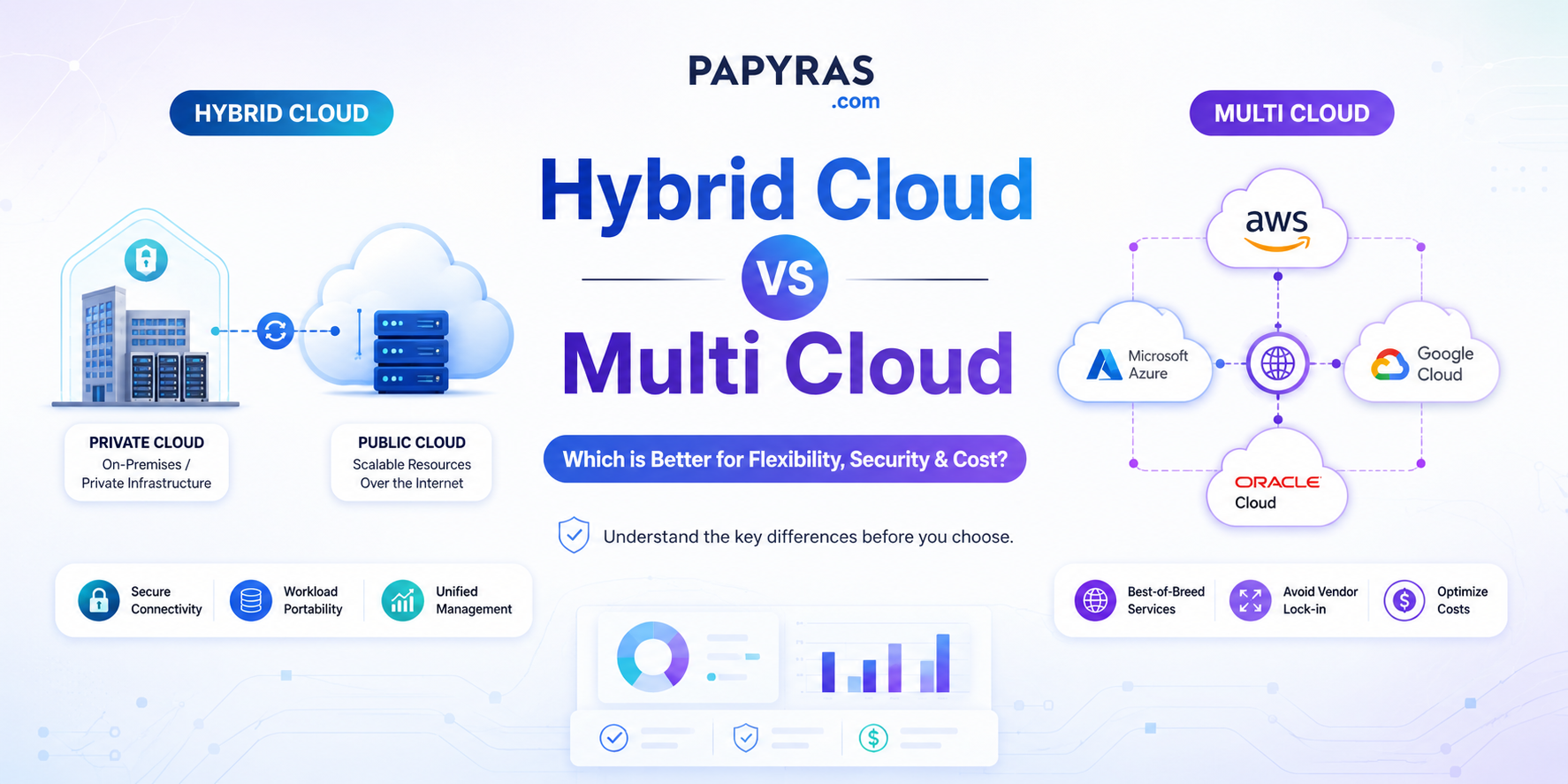
While both strategies use more than one cloud environment, they solve different problems. Here are the core differences:
- Infrastructure mix: Hybrid cloud combines private and public clouds. Multi cloud uses multiple public clouds, with no private component required.
- Main goal: Hybrid cloud focuses on control and integration. Multi cloud focuses on flexibility and avoiding vendor lock-in.
- Data movement: In hybrid cloud, data and apps move between private and public environments as one connected system. In multi cloud, each provider can operate independently.
- Best use case: Hybrid cloud suits businesses with strict security or compliance needs. Multi cloud suits businesses wanting the best features from different providers.
One simple way to remember it: hybrid cloud is about how your clouds connect (private plus public), while multi cloud is about how many providers you use.
It's worth noting these strategies aren't mutually exclusive. A business can run a hybrid cloud setup while also using multiple public cloud providers—making it both hybrid and multi cloud at once.
Benefits and Challenges of Hybrid Cloud
Hybrid cloud offers a strong mix of control and scalability, but it comes with its own trade-offs.
Benefits of Hybrid Cloud
- Better security and compliance: Sensitive data stays in your private cloud, helping you meet strict regulations like HIPAA or GDPR.
- Cost control: You can keep steady workloads on-premises while using the public cloud only when demand spikes, avoiding wasted spending.
- Flexibility: Move workloads between environments based on changing needs.
- Scalability: Tap into public cloud resources instantly when you need extra capacity.
Challenges of Hybrid Cloud
- Complex setup: Connecting private and public environments requires technical skill and careful planning.
- Higher maintenance: Managing two environments means more moving parts to monitor.
- Integration hurdles: Making private and public systems work smoothly together can take time and resources.
Hybrid cloud works best for businesses that handle regulated data but still want room to scale.
Benefits and Challenges of Multi Cloud
Multi cloud gives businesses freedom and choice, though juggling several providers brings its own complications.
Benefits of Multi Cloud
- No vendor lock-in: Spreading workloads across providers means you're never trapped with one company's pricing or limitations.
- Best-of-breed tools: Pick the strongest service from each provider for each specific task.
- Improved reliability: If one provider goes down, your operations can keep running on another.
- Negotiating power: Using multiple vendors can give you leverage on pricing and contracts.
Challenges of Multi Cloud
- Management complexity: Each provider has its own tools, dashboards, and billing systems to track.
- Skill demands: Your team needs to understand multiple platforms, which can stretch resources.
- Security gaps: More providers mean a larger surface area to secure and monitor.
- Cost tracking: Watching spending across several providers can get confusing without the right tools.
Multi cloud is a great fit for businesses that value flexibility and want to avoid depending on a single provider.
Hybrid Cloud vs Multi Cloud: Which Is Better?
There's no single winner—the better choice depends on your business priorities.
Choose hybrid cloud if data security and compliance matter most to you. It's the stronger option for industries like healthcare, finance, and government, where sensitive information must stay tightly controlled. Hybrid cloud also makes sense if you already have on-premises infrastructure you want to keep using.
Choose multi cloud if flexibility and reliability are your top concerns. It's ideal for businesses that want to cherry-pick the best tools, avoid vendor lock-in, and keep operations running even if one provider fails.
Consider both if your business is large or complex. Many enterprises combine the two—using a hybrid setup for sensitive workloads while spreading other workloads across multiple public providers. This blended approach delivers control and flexibility together.
The key is to start with your needs, not the technology. Ask yourself: How sensitive is my data? How much flexibility do I need? What can my team realistically manage? Your answers will point you toward the right strategy.
Final Thoughts on Choosing Your Cloud Strategy
Picking between hybrid cloud and multi cloud comes down to what your business values most. If keeping sensitive data secure and meeting compliance rules is your priority, hybrid cloud is likely your best bet. If you want flexibility, reliability, and freedom to choose the best tools, multi cloud may serve you better. And for many growing businesses, a mix of both offers the best of both worlds.
Take time to assess your data, budget, and team capabilities before committing. The right cloud strategy isn't about following trends—it's about supporting how your business actually works. Start small, plan carefully, and you'll build a setup that keeps your data safe and your operations running smoothly.
Frequently Asked Questions
What is the main difference between hybrid cloud and multi cloud?
The main difference is that hybrid cloud combines private and public clouds, while multi cloud uses multiple public cloud providers. Hybrid cloud connects different types of environments into one system, focusing on control. Multi cloud spreads workloads across several public providers, focusing on flexibility. A helpful tip: think "private plus public" for hybrid and "many providers" for multi-cloud.
Is hybrid cloud better than multi cloud?
Neither is universally better—it depends on your business needs. Hybrid cloud is stronger for security and compliance, making it ideal for regulated industries. Multi cloud is better for flexibility and avoiding vendor lock-in. Start by identifying your top priority, whether that's data control or freedom of choice, and let that guide your decision.
Can a business use both hybrid cloud and multi-cloud together?
Yes, many businesses use both strategies at once. A company can run a hybrid cloud for sensitive data while spreading other workloads across multiple public providers. This combined approach is common among large enterprises that need both tight control and broad flexibility. Just be prepared for added management complexity when running both.
Which cloud strategy is more cost-effective?
It depends on how you use it, but a hybrid cloud often offers better cost control for steady workloads. Hybrid cloud lets you keep predictable tasks on-premises and only pay for public cloud during demand spikes. Multi-cloud can save money through vendor competition, but tracking spending across providers requires careful monitoring to avoid surprises.
Which is better for security: hybrid cloud or multi-cloud?
Hybrid cloud generally offers stronger security for sensitive data. It lets you keep critical information in a private cloud while meeting strict compliance rules. Multi cloud can still be secure, but managing several providers creates a larger surface to protect. If security is your top concern, hybrid cloud is usually the safer choice.