 Jul 01, 2026 - 0
Minutes read
Jul 01, 2026 - 0
Minutes read
Inverter vs Non-Inverter AC
Inverter vs Non-inverter AC: Which One Should You Buy?
Inverter vs Non-Inverter AC: Which Is Better for Your Home?
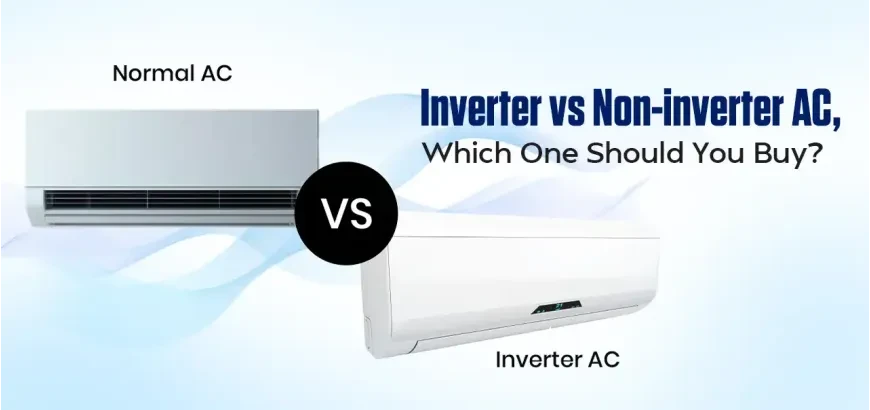
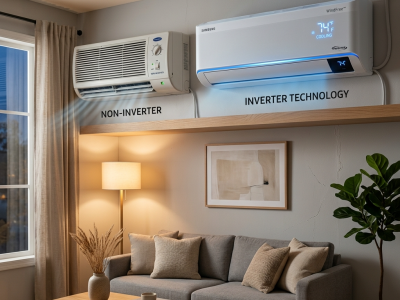
Inverter ACs adjust their compressor speed to maintain a set temperature, making them more energy-efficient and quieter over time. Non-inverter ACs run at a fixed speed and cost less upfront. For most homes with regular, long-term use, an inverter AC will save more money on electricity bills.
Choosing the wrong air conditioner can mean higher electricity bills, inconsistent cooling, and a unit that wears out faster than it should. With so many options on the market, it's easy to feel overwhelmed—especially when you're not sure what "inverter technology" actually means or whether it's worth the extra cost.
This guide breaks down everything you need to know about inverter vs non-inverter ACs—from how they work and how much electricity they use, to which one fits your budget, room size, and lifestyle. By the end, you'll have a clear, confident answer on which AC is the right choice for your home.
What Is an Inverter AC?
An inverter AC uses a variable-speed compressor that continuously adjusts its output to match the cooling demand of a room. Rather than switching the compressor on and off repeatedly, the inverter motor slows down or speeds up as needed—much like how a car's accelerator works.
When you first turn on an inverter AC in a hot room, the compressor runs at full speed to cool things down quickly. Once the room reaches the target temperature, the compressor drops to a lower speed to maintain it. This constant, controlled operation is what makes inverter ACs so efficient.
Key characteristics of inverter ACs:
- Variable-speed compressor that adjusts based on cooling load
- Faster initial cooling due to high startup power
- Quieter operation because the compressor rarely runs at full capacity
- Longer lifespan due to reduced mechanical stress
- Higher upfront cost, but lower running costs over time
Inverter ACs are widely available from brands like Daikin, Mitsubishi, LG, and Samsung, and they carry Energy Star ratings that reflect their efficiency credentials.
What Is a Non-Inverter AC?
A non-inverter AC—sometimes called a fixed-speed AC—operates with a compressor that runs at a single, constant speed. The compressor switches on when the room gets warm and shuts off once the set temperature is reached. This cycle repeats throughout the day.
Think of it like a light switch: it's either fully on or fully off. There's no middle ground.
This on-off operation is simpler by design, which is why non-inverter ACs typically cost less to buy. However, each time the compressor restarts, it draws a significant surge of electricity—and that adds up over time.
Key characteristics of non-inverter ACs:
- Fixed-speed compressor that runs at full power or not at all
- Slower, less consistent temperature regulation
- Louder operation due to frequent compressor cycling
- Lower purchase price, but higher long-term running costs
- More mechanical wear from repeated start-stop cycles
Non-inverter ACs are still widely used in budget-conscious households and rentals where the upfront cost is the primary concern.
Inverter vs Non-Inverter AC: Key Differences Explained
Here's a side-by-side breakdown of the most important differences between the two technologies:
Feature | Inverter AC | Non-Inverter AC |
|---|---|---|
Compressor type | Variable speed | Fixed speed |
Energy efficiency | High | Moderate |
Upfront cost | Higher | Lower |
Running cost | Lower | Higher |
Noise level | Quieter | Louder |
Temperature consistency | Precise | Less consistent |
Lifespan | Longer | Shorter |
Best for | Long daily use | Occasional use |
The differences go beyond energy bills. Inverter ACs provide a noticeably smoother, more comfortable environment—no sudden blasts of cold air followed by warm spells. The temperature stays steady, which many users find far more comfortable for sleeping or working from home.
Non-inverter ACs, on the other hand, deliver adequate cooling for most situations. They're predictable, easy to maintain, and widely understood by technicians—making repairs straightforward and affordable.
Which AC Saves More Electricity?
Inverter ACs save significantly more electricity than non-inverter ACs, particularly when used for extended periods each day.
According to the Bureau of Energy Efficiency (BEE), inverter ACs can consume 30–50% less electricity than their non-inverter counterparts under similar usage conditions. The savings come from two main sources: eliminating repeated compressor restarts (each of which draws a power surge) and running at a reduced load once the room is cool.
Here's a practical example: A 1.5-ton non-inverter AC running 8 hours a day at full capacity consumes roughly 12 units of electricity daily. A comparable inverter model, once the room reaches temperature, might consume as few as 6–8 units under the same conditions—depending on room size, insulation, and outdoor temperature.
When does an inverter AC save the most energy?
The efficiency advantage of an inverter AC is most pronounced when:
- The AC runs for 6+ hours a day. Short, infrequent sessions don't allow the inverter technology to deliver meaningful savings.
- Outdoor temperatures fluctuate. The variable compressor adapts continuously, rather than fighting the environment at full power.
- The room is well-insulated. A well-sealed room allows the compressor to maintain temperature at low speeds, minimizing energy draw.
For those running their AC only an hour or two per day, the efficiency gap between inverter and non-inverter narrows. In that scenario, the lower upfront cost of a non-inverter model can make more financial sense.
Which One Should You Choose Based on Budget, Room Size, and Usage?
There's no single right answer—the best AC depends on your specific situation. Here's how to think through the decision:
Choosing based on budget
If upfront cost is your priority: A non-inverter AC will cost noticeably less at the point of purchase. For households on a tight budget, this can be the deciding factor. However, factor in electricity costs over 3–5 years before assuming it's the cheaper option overall.
If long-term savings matter more: An inverter AC typically pays for itself within 2–3 years through reduced electricity bills, especially in regions with high electricity tariffs. After that, the ongoing savings are pure value.
Choosing based on room size
- Small rooms (up to 120 sq ft): Either option works well. A 0.75-ton or 1-ton unit will cool the space efficiently regardless of inverter technology.
- Medium rooms (120–200 sq ft): A 1–1.5-ton inverter AC is ideal. The variable compressor handles changing thermal loads better, maintaining comfort without overcooling.
- Large rooms or open-plan spaces (200+ sq ft): A 1.5–2-ton inverter AC is the stronger choice. The ability to ramp up power when needed—then dial back—makes it far more effective in spaces where heat load varies throughout the day.
Choosing based on usage patterns
Daily use of 6+ hours: Go with an inverter AC. The energy savings compound quickly, and the consistent temperature control adds genuine comfort.
Occasional use (1–3 hours per day): A non-inverter AC is a practical, cost-effective option. The efficiency advantage of an inverter model won't fully materialize with short usage windows.
Running the AC overnight: An inverter AC is the clear winner here. Its quiet operation and steady temperature make for better sleep quality, and the low-power maintenance mode keeps electricity consumption minimal through the night.
A note on climate
Those living in consistently hot climates—where the AC runs almost year-round—will see the greatest return on an inverter AC. In cooler climates where the unit sits idle for months at a time, the financial case for an inverter model weakens slightly, though the comfort benefits remain.
Making the Right Call for Your Home
The inverter vs non-inverter debate doesn't have a universally correct answer, but the pattern is clear: for most modern homes with regular AC use, an inverter model delivers better value over time.
The lower running costs, quieter operation, and longer lifespan make inverter ACs a smart investment—particularly for bedrooms, home offices, and living spaces where the unit runs for several hours each day. Non-inverter ACs remain a solid choice for budget-constrained buyers, rental properties, or spaces used only occasionally.
Before purchasing, calculate your expected daily usage, check local electricity tariffs, and compare the total cost of ownership (purchase price + estimated electricity costs over 5 years). That number will tell you more than any spec sheet.
If you're unsure which capacity suits your room, most AC manufacturers offer free online sizing calculators—worth using before you commit.
Frequently Asked Questions
Is inverter AC better than non-inverter AC?
Yes, inverter AC is better for most homes—especially with regular, long-term use. Inverter ACs maintain temperature more precisely, run more quietly, and consume significantly less electricity than non-inverter models. The higher upfront cost is generally recovered within 2–3 years through lower electricity bills.
Does inverter AC really save electricity?
Yes, inverter ACs genuinely save electricity—typically 30–50% compared to non-inverter models under similar conditions, according to the Bureau of Energy Efficiency. The savings are most significant when the AC runs for 6 or more hours daily. Tip: pair your inverter AC with good room insulation to maximize efficiency.
Which AC is cheaper to maintain?
Non-inverter ACs are generally cheaper to maintain in the short term, since their simpler mechanics are easier and less expensive to repair. However, inverter ACs experience less mechanical wear due to fewer compressor start-stop cycles, which means fewer breakdowns over the unit's lifetime—making long-term maintenance costs competitive.
Is non-inverter AC good for home use?
Non-inverter AC works well for home use when the unit runs infrequently—typically 1–3 hours per day. It cools rooms effectively at a lower purchase price, and repairs are straightforward. If your household only needs occasional cooling, a non-inverter model is a practical, budget-friendly option.
Which AC is best for long-term use?
Inverter AC is the better choice for long-term use. Its variable-speed compressor reduces mechanical stress, extending the unit's lifespan. Combined with lower electricity running costs over years of operation, an inverter AC offers greater overall value—making it the preferred option for homeowners planning to use their AC regularly for many years.