 Jun 30, 2026 - 0
Minutes read
Jun 30, 2026 - 0
Minutes read
Main Facts To Check Before Buying A Portable Power Station
Portable Power Station: Complete Buying Guide for Backup Power, Camping & Emergency Use
Portable Power Station: Complete Buying Guide for Backup Power, Camping & Emergency Use
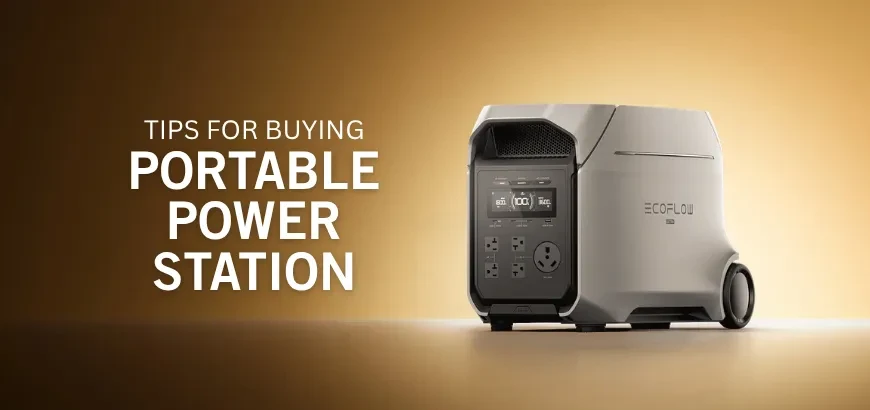
A portable power station is a rechargeable battery-powered generator that stores electricity and delivers it through AC outlets, USB ports, and DC plugs. Portable power stations are used for home backup, camping, travel, and emergency preparedness—offering a clean, quiet, and fuel-free alternative to traditional gas generators.
A blackout hits at 11 PM. Your phone is at 4%, the fridge is warming up, and you have no idea when the power will come back. If you've ever been caught in that situation, you already know the frustration—and the quiet panic—that comes with being completely unprepared. A portable power station changes that equation entirely.
This guide will walk you through everything you need to know: how portable power stations work, what features actually matter, how to pick the right size for your needs, and where they make the biggest difference—whether that's keeping your home running during an outage or powering your campsite miles from the nearest outlet. By the end, you'll have a clear, confident path to choosing the right unit for your lifestyle.
What Is a Portable Power Station and How Does It Work?
A portable power station is a large-capacity rechargeable battery unit that stores electrical energy and distributes it through multiple output ports. Unlike traditional fuel-powered generators, portable power stations run silently, produce zero emissions, and can be used safely indoors.
At the core of most modern portable power stations is a lithium-ion or lithium iron phosphate (LiFePO4) battery. LiFePO4 chemistry, in particular, has become the preferred choice for premium models due to its longer cycle life—often rated for 2,000 to 3,500+ charge cycles—and its superior thermal stability compared to standard lithium-ion cells.
How does a portable power station charge and discharge power?
Portable power stations can be recharged in three main ways:
- Wall outlet (AC charging): The fastest and most common method, typically restoring full capacity in 1–3 hours for fast-charge-enabled models.
- Solar panels: A clean, off-grid option that pairs naturally with camping and emergency scenarios. Charging time depends on panel wattage and sunlight conditions.
- Car adapter (12V DC): A slower option suited for topping up while driving between locations.
On the output side, a portable power station typically offers a combination of AC outlets (for standard household appliances), USB-A and USB-C ports (for phones, tablets, and laptops), and DC barrel ports or car-style cigarette lighter sockets (for 12V devices).
Why You Need a Portable Power Station
Power disruptions are more frequent than most people expect. According to the U.S. Energy Information Administration (EIA), the average American experiences about 1.2 hours of power interruption per year under normal conditions—a figure that climbs significantly during storms, heatwaves, or grid stress events.
Beyond emergencies, portable power stations have become a staple for outdoor enthusiasts, remote workers, van lifers, and anyone who needs reliable power away from the grid. They eliminate the noise, fumes, and fuel costs associated with gas generators while delivering clean, stable power to sensitive electronics.
There's also a safety argument worth making. Gas generators produce carbon monoxide—a colorless, odorless gas responsible for hundreds of accidental deaths in the U.S. each year. A portable power station carries none of that risk, making it the safer choice for indoor use, garages, and enclosed campsites.
How to Choose the Best Portable Power Station
Choosing the right portable power station comes down to matching the unit's capacity and output to your specific use case. A unit that's perfect for weekend camping trips won't necessarily meet the demands of a whole-home backup setup. Here's how to narrow it down.
What capacity (Wh) do you actually need?
Battery capacity is measured in watt-hours (Wh). A higher Wh rating means the unit can store and deliver more energy before needing a recharge.
As a general rule:
- 200–500 Wh: Suitable for phone charging, small fans, lights, and laptops. Best for day hikes and light camping.
- 500–1,000 Wh: Handles a broader range of devices, including small appliances, CPAP machines, and camera gear. A solid mid-range choice for weekend campers and light emergency backup.
- 1,000–2,000 Wh: Capable of running mini-fridges, power tools, and multiple devices simultaneously. Ideal for extended outdoor stays or short-term home backup.
- 2,000 Wh+: High-capacity units suited for serious off-grid living, RV use, or powering critical home appliances like refrigerators and medical equipment during extended outages.
Does the inverter type matter?
Yes—and this is a detail many buyers overlook. Portable power stations use either a pure sine wave inverter or a modified sine wave inverter. Pure sine wave inverters produce a clean, stable current that's safe for sensitive electronics like laptops, medical devices, and modern appliances. Modified sine wave inverters are cheaper but can cause issues with certain devices or even damage them over time.
For most buyers, a pure sine wave inverter is the right choice and is now standard on the majority of reputable mid-range and premium models.
Key Features to Check: Battery Capacity, Watts, Ports & Charging Speed
When comparing portable power stations side by side, these are the specifications that matter most.
Battery capacity (Wh) and continuous output wattage
Wh tells you how much energy is stored. Watts (W) tell you how much power the unit can deliver at once. Both numbers matter. A 1,000 Wh station with only a 500W continuous output will struggle to run a microwave, even if it technically has enough stored energy.
Always cross-reference the capacity with the continuous wattage and the peak (surge) wattage. Peak wattage handles the brief power spike when a motor-driven appliance—like a refrigerator compressor—first starts up.
Port variety and total output
Look for a generous mix of:
- AC outlets (standard 120V in the US)
- USB-C with Power Delivery (PD): Essential for fast-charging laptops and modern phones
- USB-A: For older devices and accessories
- 12V DC/car port: Useful for coolers, tire inflators, and automotive accessories
More ports mean more flexibility, especially if you're powering multiple devices simultaneously.
Charging speed and pass-through capability
Some portable power stations support fast AC charging—cutting recharge times from 8+ hours down to 1–2 hours. This is a meaningful feature during emergencies where you may only have a short window of grid power available.
Pass-through charging—the ability to power devices while the unit itself is recharging—is another practical feature worth confirming before purchase.
Weight and portability
Capacity and portability often trade off against each other. A 500 Wh unit typically weighs 10–15 lbs, making it genuinely portable for backpackers and day-trippers. Units above 1,500 Wh often weigh 30–50+ lbs and are better transported with a cart or kept semi-permanently in a vehicle or home.
Best Uses of Portable Power Stations: Home Backup, Camping, Travel & Outdoor Work
Home backup power during outages
For home use, a portable power station serves as an instant bridge between a grid outage and either power restoration or a larger backup solution. A 1,000–2,000 Wh unit can keep essentials running—lights, phone chargers, a router, and a small fan—for 12–24 hours depending on usage.
Pair the unit with solar panels for an indefinitely extendable power source that doesn't rely on fuel availability.
Camping and overlanding
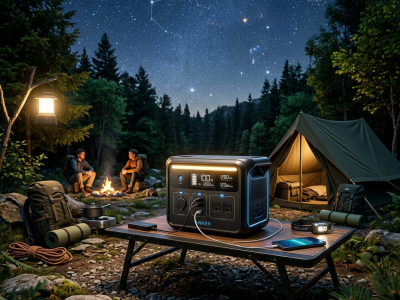
Portable power stations have transformed the camping experience. A 500–1,000 Wh unit can run LED lighting, charge all your devices, power a portable cooler, and even run an electric camping stove or air pump. Solar compatibility makes them ideal for multi-day trips where wall charging isn't an option.
Remote work and travel
Digital nomads and remote workers increasingly rely on portable power stations to stay productive in locations without reliable power access—co-working spaces with limited outlets, rural Airbnbs, or outdoor settings. A compact 200–500 Wh unit fits in a large backpack and can power a laptop through multiple full workdays on a single charge.
Outdoor work and job sites
Contractors, photographers, and event professionals benefit from portable power stations in locations where running an extension cord isn't practical. A 1,000–2,000 Wh station with a high continuous output can run power tools, lighting rigs, and charging stations at remote job sites without the noise or fume issues of a gas generator.
Choosing a Portable Power Station Is Simpler Than It Looks
The core decision comes down to two questions: How much energy do you need, and how will you use it? Answer those, and the right unit becomes much easier to identify. Start by calculating the wattage of the devices you plan to run, estimate how long you'll need to power them, and match that against the capacity and output specifications of the units you're comparing.
A portable power station is an investment in convenience, safety, and preparedness—one that pays off the first time the lights go out or the campsite is miles from the nearest outlet. For most households, a 1,000–1,500 Wh unit with solar compatibility offers the best balance of versatility and value. For light everyday use, a compact 200–500 Wh model is hard to beat.
Frequently Asked Questions
What is a portable power station?
A portable power station is a rechargeable battery device that stores electrical energy and delivers it through AC outlets, USB ports, and DC connections. Portable power stations run silently, produce no emissions, and can be used indoors—making them a safer and quieter alternative to gas-powered generators for home backup, camping, and travel.
How long can a portable power station run devices?
Runtime depends on the station's capacity (Wh) and the power draw of the device (W). Divide the capacity by the device's wattage to estimate runtime. For example, a 1,000 Wh station running a 50W fan will last approximately 20 hours. In practice, factor in roughly 10–20% energy loss from the inverter and battery discharge curve.
Can a portable power station run a refrigerator?
Yes, but you'll need a unit with sufficient capacity and output wattage. A standard full-size refrigerator draws 100–400W continuously and may spike to 1,200W+ at startup. A portable power station with at least 1,500 Wh capacity, 1,000W+ continuous output, and a high peak wattage rating can run a refrigerator—though runtime will be limited. A compact 12V camping cooler is a more efficient alternative for outdoor use.
How many watts do I need in a portable power station?
The wattage you need depends on the devices you plan to power simultaneously. Add up the wattage of each device to find your minimum continuous output requirement. As a practical benchmark: smartphones need 5–20W, laptops 45–100W, mini-fridges 50–150W, and power tools 800–2,000W. Always choose a unit with a continuous output rating comfortably above your calculated total.
Is a portable power station better than a generator?
For most home users and outdoor enthusiasts, yes—portable power stations are safer, quieter, and easier to use. They produce no carbon monoxide, require no fuel, and can be used indoors without ventilation. Gas generators, however, typically offer higher continuous output and unlimited runtime as long as fuel is available. Choose a portable power station if convenience, safety, and clean energy matter most. Choose a gas generator if you need to run high-wattage appliances for extended periods during a prolonged outage.