 Jul 10, 2026 - 0
Minutes read
Jul 10, 2026 - 0
Minutes read
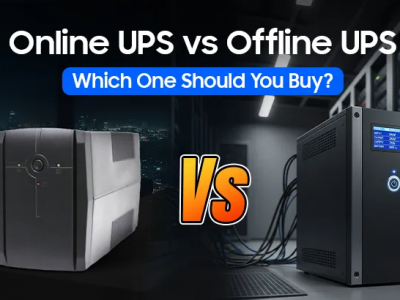
Online UPS vs Offline UPS - Which One Should You Buy?
Online UPS vs Offline UPS: Key Differences Explained
Online UPS vs Offline UPS: Key Differences and How to Choose
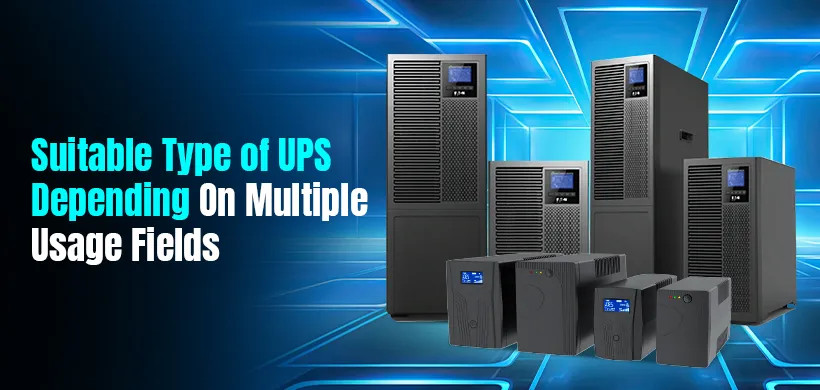
An online UPS provides continuous, clean power by constantly converting electricity through its battery, offering zero transfer time and superior surge protection. An offline UPS only switches to battery power during an outage, making it simpler and cheaper but slower to respond. The right choice depends on how sensitive your equipment is and your budget.
Power cuts happen without warning. When they do, the wrong UPS can mean corrupted data, damaged hardware, or lost work—and that's a risk most people don't think about until it's too late.
This guide breaks down the real differences between online and offline UPS systems, what each one does well, and how to figure out which one actually fits your setup. No jargon, no guesswork—just clear answers to help you make a confident decision.
What Is an Online UPS?
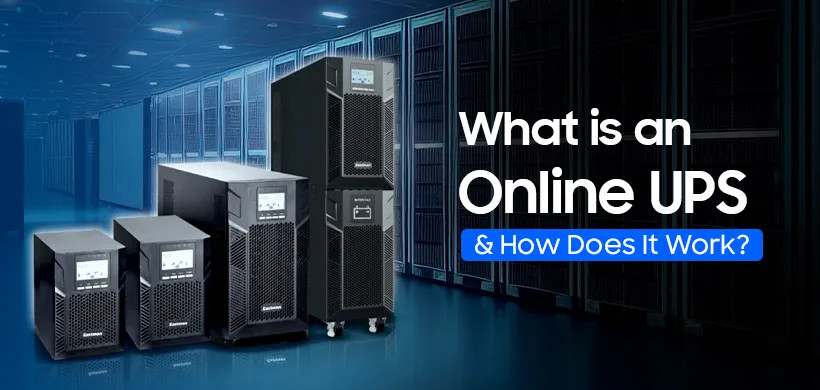
An online UPS (also called a double-conversion UPS) sits between your power source and your devices at all times. Every watt of electricity passes through the UPS's inverter before reaching your equipment—regardless of whether the power is stable or not.
Here's how it works: incoming AC power is first converted to DC, then back to AC. This constant conversion process produces clean, regulated power free from voltage spikes, sags, and electrical noise. Because the battery is always in the loop, there is zero transfer time when a power outage occurs. Your devices experience no interruption whatsoever.
Key Technical Characteristics of Online UPS Systems
- Transfer time: 0 milliseconds (no switching delay)
- Power conversion: Double-conversion (AC → DC → AC)
- Output power quality: Highly regulated and clean
- Battery usage: Continuous, throughout normal operation
- Typical efficiency: 90–95% in standard mode; up to 99% in ECO mode
- Common applications: Data centers, hospitals, servers, networking equipment, industrial machinery
Online UPS systems are the gold standard for power protection. According to Schneider Electric, a global leader in energy management, double-conversion UPS systems are the preferred choice for mission-critical applications because they eliminate virtually all power-related risks.
What Is an Offline UPS?
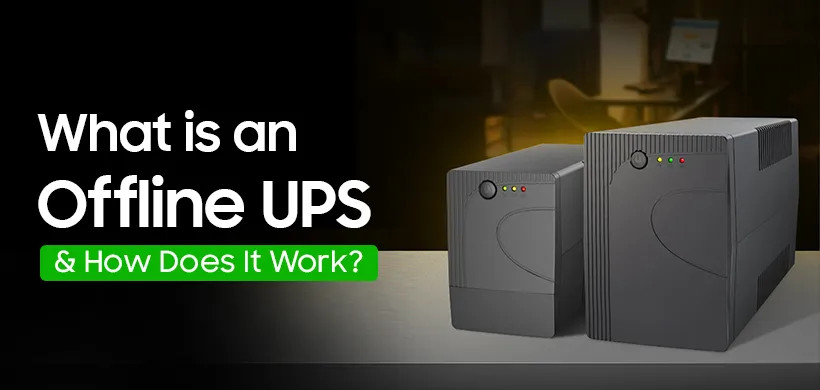
An offline UPS (also called a standby UPS) takes a simpler approach. Under normal conditions, your equipment runs directly off the utility power supply. The UPS monitors the line and only switches to battery power when it detects an outage or significant voltage drop.
This switchover typically takes between 4 and 10 milliseconds. For most consumer electronics, that's fast enough to prevent disruption. However, for sensitive equipment that requires uninterrupted, consistent power, even that brief gap can cause problems.
Key Technical Characteristics of Offline UPS Systems
- Transfer time: 4–10 milliseconds
- Power conversion: Single conversion (only during outages)
- Output power quality: Depends on utility supply quality
- Battery usage: Only activated during outages or voltage issues
- Typical efficiency: 95–98% (less energy wasted during normal operation)
- Common applications: Desktop computers, basic networking equipment, home appliances, small offices
Offline UPS systems are widely used in homes and small businesses where power reliability is generally good and the connected equipment is not highly sensitive to brief power gaps.
Online UPS vs Offline UPS: Key Differences
Understanding the head-to-head comparison makes the decision much clearer. Here's a detailed breakdown:
Feature | Online UPS | Offline UPS |
|---|---|---|
Transfer Time | 0 ms | 4–10 ms |
Power Quality | Highly regulated | Utility-dependent |
Battery Operation | Continuous | During outages only |
Energy Efficiency | 90–95% (standard mode) | 95–98% |
Cost | Higher | Lower |
Noise Level | Higher (cooling fans) | Lower |
Heat Generation | More | Less |
Best For | Servers, hospitals, data centers | Home PCs, basic office equipment |
Battery Life | Shorter (continuous use) | Longer (standby use) |
How do online and offline UPS systems handle voltage fluctuations differently?
This is where the gap between the two technologies becomes most apparent. An offline UPS passes utility voltage directly to connected devices during normal operation. If that voltage fluctuates—dipping too low or spiking too high—the equipment absorbs that irregularity until the UPS kicks in.
An online UPS eliminates this problem entirely. Because power is constantly being re-converted, the output voltage is always stable and within safe tolerances. For equipment like medical devices, industrial controllers, or enterprise servers, this level of protection can be the difference between reliable operation and unexpected failure.
Advantages and Disadvantages of Online and Offline UPS Systems
Online UPS: Pros and Cons
Advantages:
- Zero transfer time means truly uninterrupted power
- Protects against all power anomalies—outages, surges, sags, and electrical noise
- Ideal for sensitive and mission-critical equipment
- Consistent output voltage regardless of input quality
- Many models offer ECO mode to reduce energy consumption during stable grid conditions
Disadvantages:
- Higher upfront cost compared to offline models
- Greater heat generation, requiring adequate ventilation
- Battery replacement cycles are shorter due to constant use
- Louder operation due to active cooling systems
Offline UPS: Pros and Cons
Advantages:
- Lower purchase and maintenance cost
- High efficiency during normal operation (less energy waste)
- Quieter and cooler in standard use
- Longer battery lifespan (battery only activates when needed)
- Compact and easy to install
Disadvantages:
- Transfer delay (4–10 ms) may disrupt sensitive equipment
- Offers limited protection against power quality issues
- Performance depends on the quality of the incoming utility supply
- Not suitable for mission-critical or highly sensitive applications
Which UPS Is Best for Your Needs?
Choosing between an online and offline UPS comes down to three factors: the sensitivity of your equipment, the quality of your local power supply, and your budget.
When should you choose an online UPS?
Choose an online UPS if any of the following apply to your situation:
- You run servers or networking infrastructure. A single unexpected reboot can corrupt data, break active connections, or cause hours of downtime. Zero transfer time eliminates that risk.
- You operate in an environment with frequent or severe power fluctuations. Regions with unstable grid power benefit greatly from the double-conversion design, which completely isolates equipment from the utility supply.
- Your equipment is classified as sensitive or mission-critical. Medical devices, industrial automation systems, and high-performance workstations all require clean, consistent power.
- You manage a data center or enterprise IT environment. The cost of downtime in these settings far outweighs the higher price of an online UPS.
When should you choose an offline UPS?
An offline UPS is the right call when:
- You need basic protection for home computers or peripherals. The 4–10 ms transfer time is imperceptible to most consumer-grade devices.
- Your local power supply is generally stable. If outages are rare and voltage fluctuations are minimal, an offline UPS provides adequate protection at a much lower cost.
- Budget is a primary concern. For small offices or home users, offline UPS systems offer solid value without the complexity of double conversion.
- You prioritize energy efficiency. Because offline UPS systems only convert power during outages, they waste less electricity during normal operation—a meaningful advantage for cost-conscious users.
What about line-interactive UPS systems?
Line-interactive UPS systems occupy the middle ground between online and offline designs. They use an autotransformer to regulate voltage without switching to battery power during minor fluctuations—offering better power conditioning than offline UPS systems without the full cost of double conversion.
Line-interactive UPS systems are a strong choice for small-to-medium businesses that need better-than-basic protection but don't require the zero-transfer-time performance of an online UPS.
Making the Right UPS Decision for Your Setup
The online vs offline UPS debate doesn't have a universal winner—it has a right answer for each specific situation. Online UPS systems offer unmatched protection and are worth every dollar in environments where downtime or data loss is unacceptable. Offline UPS systems deliver reliable, cost-effective backup power for everyday home and office use where brief transfer times are tolerable.
Before purchasing, audit your equipment's sensitivity, evaluate the reliability of your local power grid, and calculate the real cost of potential downtime. That combination will point you clearly toward the right system.
When in doubt, remember this: the cost of the right UPS is always less than the cost of replacing damaged equipment or recovering from unexpected data loss.
Frequently Asked Questions
What is the main difference between an online UPS and an offline UPS?
The main difference is how and when each system uses its battery. An online UPS runs all connected equipment through its battery constantly, delivering zero transfer time and clean, regulated power at all times. An offline UPS keeps the battery in standby and only switches to it when the utility supply fails—introducing a brief delay of 4–10 milliseconds.
Is an online UPS better than an offline UPS?
An online UPS offers superior protection, but "better" depends on your use case. For servers, data centers, medical equipment, and other sensitive applications, an online UPS is clearly the better choice. For home computers and general office equipment in areas with stable power, an offline UPS provides sufficient protection at a lower cost. Choose an online UPS if zero interruption and clean power output matter; choose an offline UPS if cost and simplicity are the priority.
Which UPS is best for computers and home use?
An offline UPS is generally sufficient for home computers and personal devices. Most consumer electronics can tolerate the 4–10 ms transfer delay without any issue. Look for an offline UPS with adequate VA (volt-ampere) capacity for all your connected devices, and prioritize models with automatic voltage regulation (AVR) for added protection against minor fluctuations.
Does an online UPS consume more electricity?
Yes, an online UPS typically consumes more electricity than an offline UPS during normal operation because of the continuous double-conversion process. Standard online UPS units operate at around 90–95% efficiency. However, many modern online UPS systems include an ECO mode that bypasses the double-conversion process during stable grid conditions, pushing efficiency up to 99%—which significantly reduces ongoing energy costs.
Which UPS is better for servers and sensitive equipment?
An online UPS is the clear choice for servers and sensitive equipment. The zero-millisecond transfer time ensures servers never experience a power interruption, and the constant voltage regulation protects against spikes, sags, and electrical noise that could otherwise corrupt data or damage hardware. For enterprise IT environments and data centers, an online double-conversion UPS is widely considered the industry standard.
