 Jul 10, 2026 - 0
Minutes read
Jul 10, 2026 - 0
Minutes read
Projector vs. Interactive Flat Panel Display
Projector vs IFP Display
Projector vs. Interactive Flat Panel Display: Which One Is Better?
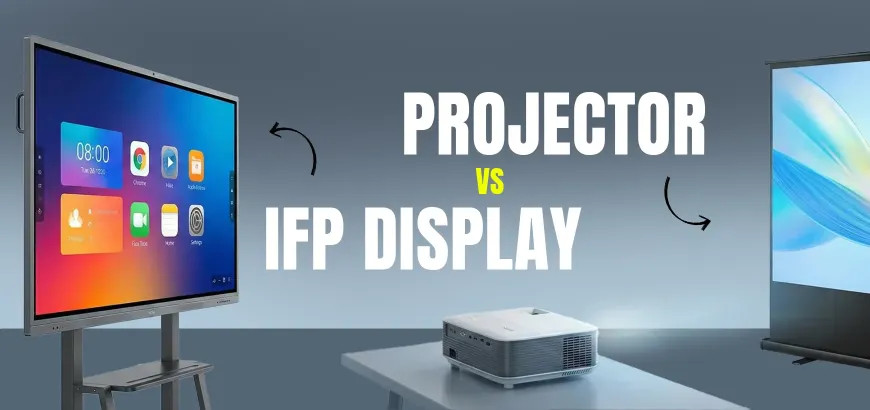
A projector is a budget-friendly option for large-screen displays, while an interactive flat panel display (IFPD) offers superior image quality, touch interactivity, and long-term durability. The right choice depends on your budget, room conditions, and how your audience will engage with the content.
Choosing the wrong display technology can quietly hurt productivity, strain eyes, and frustrate the people who use it every day. Whether you're equipping a classroom, a boardroom, or a training facility, the decision between a projector and an interactive flat panel display is one that deserves careful thought—not just a quick price comparison.
This guide breaks down exactly how these two technologies differ, where each one performs best, and which option makes the most sense for your specific environment. By the end, you'll have a clear, confident answer—no technical jargon required.
What Is a Projector?
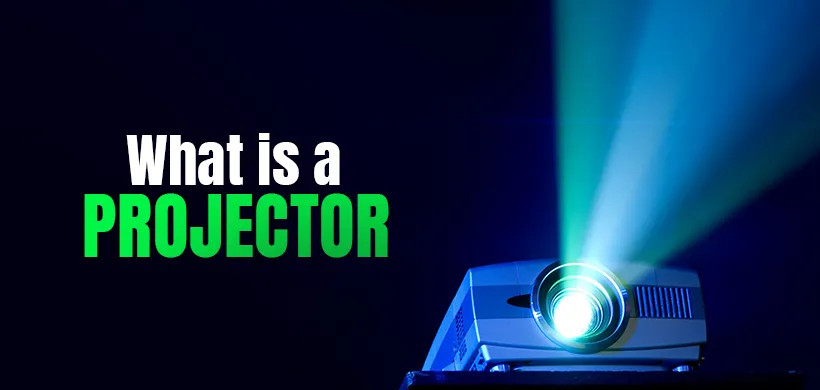
A projector is a device that beams an image from a light source onto a flat, reflective surface—typically a white screen or a plain wall. Projectors have been a classroom and conference room staple for decades, largely because they can produce very large images at a relatively low upfront cost.
How does a projector work?
Projectors use a lamp, LED, or laser light source to project magnified images over a distance. The image size is determined by how far the projector sits from the screen—the further away, the larger the image. Modern projectors often come with HDMI connectivity, wireless screen mirroring, and built-in speakers.
What are the main types of projectors?
- Standard throw projectors: Require several feet of distance between the device and the screen. Common in large auditoriums and lecture halls.
- Short-throw projectors: Can project a large image from just one or two feet away, reducing shadow interference.
- Ultra-short-throw projectors: Sit directly beneath or beside the screen, virtually eliminating shadows and glare.
- Interactive projectors: Enable touch or stylus interaction on the projected surface, blurring the line between projectors and interactive displays.
Projectors are appealing because the initial purchase price is lower than most flat panel displays. However, the ongoing cost of replacement lamps—which can burn out every 2,000 to 5,000 hours—adds up over time.
What Is an Interactive Flat Panel Display?
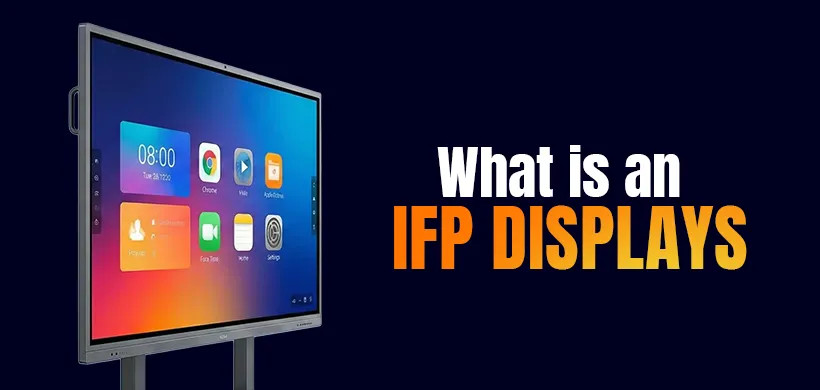
An interactive flat panel display (IFPD) is a large, wall-mounted touchscreen that combines the functionality of a TV, a whiteboard, and a computer into a single device. Think of it as a giant tablet built for collaboration.
How does an interactive flat panel display work?
IFPDs use LCD or LED screen technology with an embedded touch layer—either infrared, capacitive, or optical—that detects finger and stylus input. Most models run on an Android operating system and can connect to external computers, laptops, or mobile devices via HDMI, USB-C, or wireless casting.
What are the main types of interactive flat panel displays?
- Education IFPDs: Designed with classroom software, annotation tools, and multi-touch capability to support group learning.
- Corporate IFPDs: Built for meeting rooms and boardrooms, with wireless presentation features and video conferencing integration.
- 4K IFPDs: Offer ultra-high-definition resolution for environments where image detail and clarity are critical.
Unlike projectors, IFPDs have no lamp to replace. Most panels are rated for 50,000+ hours of use, making them a more cost-effective long-term investment despite the higher initial price tag.
Projector vs. Interactive Flat Panel Display: Key Differences
Here's a side-by-side comparison of both technologies across the factors that matter most.
Image quality and visibility
Interactive flat panel displays produce consistently bright, sharp images regardless of the lighting conditions in the room. Projectors, by contrast, are highly sensitive to ambient light—a sunlit room or even overhead fluorescent lighting can wash out the projected image significantly.
IFPDs typically offer 4K Ultra HD resolution, delivering crisp text and vivid color. Most projectors max out at 1080p Full HD, and image quality degrades as the projector ages or the lamp dims.
Verdict: IFPDs win on image quality and visibility, especially in well-lit rooms.
Interactivity and collaboration
Not all projectors are interactive. Standard projectors simply display content—there's no touch capability unless you pair them with an interactive whiteboard or upgrade to an interactive projector model.
IFPDs are built for interaction. Multi-touch screens allow multiple users to write, draw, drag, and annotate simultaneously. This makes them particularly effective for collaborative learning and brainstorming sessions.
Verdict: IFPDs offer a significantly richer interactive experience.
Installation and space requirements
Projectors need distance to work. A standard throw projector requires careful ceiling mounting and a clean sightline to the screen. Short-throw and ultra-short-throw projectors reduce this, but installation still involves more variables—screen alignment, cable management, and lamp ventilation.
IFPDs are wall-mounted units. Installation is simpler, and once the panel is up, there's nothing else to position or calibrate.
Verdict: IFPDs are easier and more flexible to install.
Cost comparison
Projectors have a lower upfront cost. A decent classroom or meeting room projector can be purchased for $500–$1,500. However, replacement lamps ($100–$400 each), maintenance, and the eventual cost of a replacement screen push the total cost of ownership higher over time.
IFPDs carry a higher initial price—typically $1,500–$5,000+ depending on screen size and features. But with no lamps, no screens to replace, and minimal maintenance, the long-term cost often works out lower.
Verdict: Projectors are cheaper upfront; IFPDs are more economical over a 5–10 year lifespan.
Durability and maintenance
Projector lamps degrade gradually. Brightness decreases, colors shift, and eventually the lamp fails. Dust buildup inside the unit can also cause overheating. Regular cleaning and lamp replacements are part of projector ownership.
IFPDs are sealed, solid-state units. There are no moving parts, no lamps to replace, and no alignment to maintain. Most manufacturers offer warranties of 3–5 years, and the panels are built to last well beyond that.
Verdict: IFPDs require significantly less maintenance.
Portability
Projectors—particularly compact or portable models—can be moved between rooms or even taken off-site. This makes them a practical choice for organizations that need display flexibility across multiple spaces.
IFPDs are fixed installations. While wheeled trolley mounts exist, they're not truly portable in the way a laptop projector is.
Verdict: Projectors offer greater portability.
Which Is Better for Classrooms, Offices, and Meeting Rooms?
The right choice isn't universal—it depends on your environment, your users, and how you plan to use the technology.
Which display is better for classrooms and schools?
For modern classrooms, interactive flat panel displays are the stronger choice. Research consistently shows that interactive, visual learning environments improve student engagement and information retention. IFPDs support multi-touch collaboration, real-time annotation, and seamless integration with educational software platforms like Google Classroom and Microsoft Teams for Education.
Projectors remain a viable option for schools with tighter budgets or very large auditoriums where screen size is the primary concern. However, for day-to-day classroom instruction, the advantages of an IFPD—better image quality in lit rooms, touch interactivity, and lower maintenance—are hard to overlook.
Best choice for schools: Interactive flat panel display, unless budget is a significant constraint.
Which display is better for offices and boardrooms?
Boardrooms and meeting rooms benefit enormously from IFPDs. Wireless screen sharing, video conferencing compatibility, and touch-enabled annotation make presentations more dynamic and meetings more efficient. The sharp image quality of an IFPD also ensures that charts, spreadsheets, and presentations look professional under any lighting conditions.
For large venues like training auditoriums or event halls—where a 100"+ display is needed—a high-quality projector may still be the more practical solution.
Best choice for offices and boardrooms: Interactive flat panel display for most meeting rooms; projectors for large-scale event spaces.
When does a projector still make sense?
Projectors still have a place in specific scenarios:
- Large venues where screen sizes above 100" are needed
- Budget-constrained environments where upfront cost is the primary factor
- Temporary or mobile setups where portability matters
- Home cinema setups where ambient light can be controlled
Making the Right Decision for Your Space
There's no single winner in the projector vs. interactive flat panel display debate—only the right tool for the right context. For most modern classrooms and professional meeting rooms, interactive flat panel displays offer a compelling combination of image clarity, interactivity, durability, and long-term value. Projectors, on the other hand, remain a cost-effective option for large venues and organizations that prioritize upfront affordability or portability.
Before making a decision, assess your room's lighting conditions, how your team or students will interact with the display, and what your total budget looks like over a 5-year period—not just at the point of purchase. That full-picture view will lead you to the right choice every time.
Frequently Asked Questions
What is the main difference between a projector and an interactive flat panel display?
A projector beams an image onto a screen from a light source, while an interactive flat panel display is a self-contained touchscreen unit mounted on a wall. The key difference is interactivity—most projectors simply display content, while IFPDs allow users to touch, write, and collaborate directly on the screen. IFPDs also perform better in well-lit rooms where projected images tend to wash out.
Is an interactive flat panel better than a projector?
For most classrooms and meeting rooms, yes—an interactive flat panel display offers better image quality, easier maintenance, and richer collaboration features. However, projectors are still the better option for very large venues that require screen sizes above 100", or for organizations with limited upfront budgets. The best choice depends on your specific space, usage needs, and budget.
Which option is more cost-effective for schools and offices?
Projectors cost less upfront ($500–$1,500), but ongoing expenses like lamp replacements and maintenance add up. IFPDs cost more initially ($1,500–$5,000+), but their 50,000+ hour lifespan and minimal maintenance requirements make them the more cost-effective option over a 5–10 year period. For long-term planning, factor in total cost of ownership—not just the purchase price.
Do interactive flat panels work without a computer?
Yes—most interactive flat panel displays run on a built-in Android operating system, which means they can access apps, browse the internet, and run presentations without connecting to an external computer. For more advanced tasks, you can connect a laptop or desktop via HDMI or USB-C, but a separate computer is not required for everyday use.
Which display provides better image quality and visibility?
Interactive flat panel displays provide superior image quality in most real-world conditions. They produce bright, sharp visuals at 4K resolution and are not affected by ambient light. Projectors can struggle in rooms with natural light or overhead lighting, and image quality decreases as the lamp dims over time. For consistently clear, vibrant visuals, IFPDs are the more reliable option.
